Homepages

About maHp

Involving a series of unique research and public engagement projects, the Migration and Health Project Southern Africa (maHp) aims to explore (and evaluate) ways to generate and communicate knowledge in order to improve responses to migration, health and well-being in the SADC region. Multiple disciplinary perspectives, mixed method approaches, and the involvement of various stakeholders – including migrants themselves – are central.

Latest News

Call For Applications: 2x post-doctoral fellowships in migration and health in Africa

Applications are invited for two post-doctoral fellowships at the African Centre for Migration & Society (ACMS), at the University of the Witwatersrand (South Africa). These fellowships are part of a newly established Cluster of Research Excellence (CoRE) in Migration and Health.

Call For Applications: GEMMS Research Coordinator

Applications are invited for a Research Coordinator at the African Centre for Migration & Society (ACMS), based at the University of the Witwatersrand (Wits University). The successful candidate will be responsible for coordinating GEMMS research activities in South Africa and Zimbabwe.

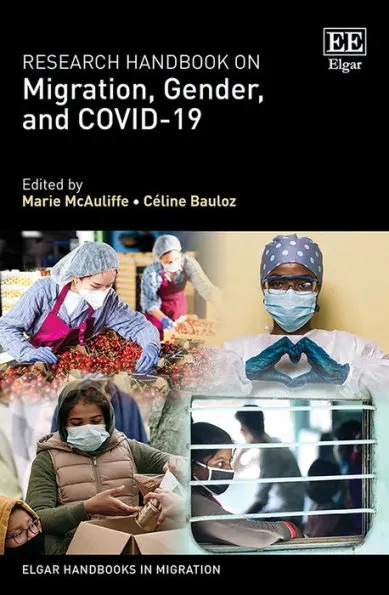
The ‘covidisation’ of migration and health research

In this erudite research handbook, ACMS/maHp postdoctoral researcher Dr Thea de Gruchy and colleagues draw together the latest research on migration, gender and COVID-19, to contribute towards a better understanding of the immediate and longer-term implications of the pandemic on gender dynamics and roles in international migration.

Wits to co-lead international research on migration and health

ACMS/maHp’s Prof. Jo Vearey has been named as one of the co-leads of the Cluster of Excellence in Migration and Health (CEMH), a new research area under a partnership by ARUA and The Guild.

OP-ED: HIV care for migrant women in South Africa – the gaps and 5 steps towards offering better services

maHp/ACMS doctoral researcher Melanie Bisnauth identifies the gaps in HIV care for migrant women in South Africa, and goes on to recommend five steps towards offering better services.

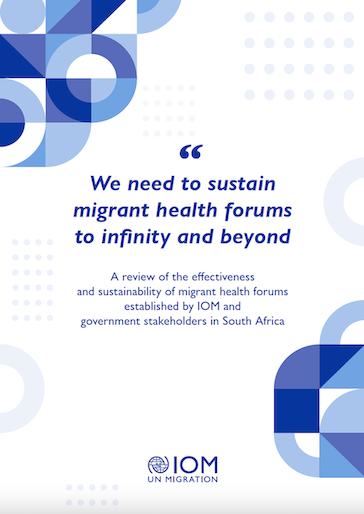
“We Need to Sustain Migrant Health Forums to Infinity and Beyond”

This IOM review by ACMS found that the sustainability of MHFs is feasible if they are government-led, issue-specific and embedded within coordination structures at all levels of policy implementation.

Explore maHp Research Projects

Bua Modiri (2019)

Bua Modiri is Setswana for “speak out worker”. The name was chosen by a group of sex workers during a Sisonke meeting. Participants in this project were asked to focus on messages specific to their occupation.

Mobility, deprivation and HIV risk

The overarching aim of this project is to conduct a large-scale study to inform the development of local level responses and programmes to address structural drivers of HIV targeting young people living in vulnerable urban environments as a key population in Malawi.

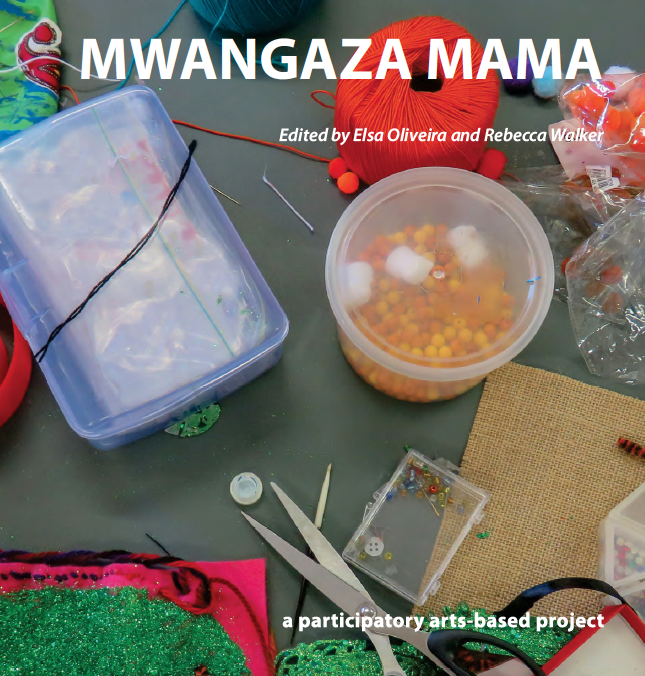
Woman is the thread: maHp intern covers the Mwangaza Mama book launch

maHp intern Elena Olivieri blogs about the launch of the Mwangaza Mama project book.

MiCoSA Issue Brief #1 – Migration and Covid-19: Emerging concerns with South Africa’s response to the pandemic

This is the first in a series of issue briefs that explores the implications of Covid-19 and the South African response to the pandemic on migration and for migrant and mobile communities in South Africa. 

SeaM: Security at the Margins

Security at the Margins – SeaM – was a three-year partnership between the University of Edinburgh and the University of Witwatersrand. Our aim was to use innovative, interdisciplinary methods to explore (in)security on the urban margins in South Africa.  Our partnership was funded by the Economic and Social Research Council (ESRC) and the South Africa National Research Foundation (NRF).

Telling the complex story of “medical xenophobia” in South Africa

maHp/ACMS doctoral researcher Kuda Vanyoro shares insights from his recent research on “medical xenophobia”, conducted in Musina. His study findings suggest that the experiences of non-nationals in South Africa’s public health care system are more complex and varied than implied by the dominant discourse on “medical xenophobia”.

css.php